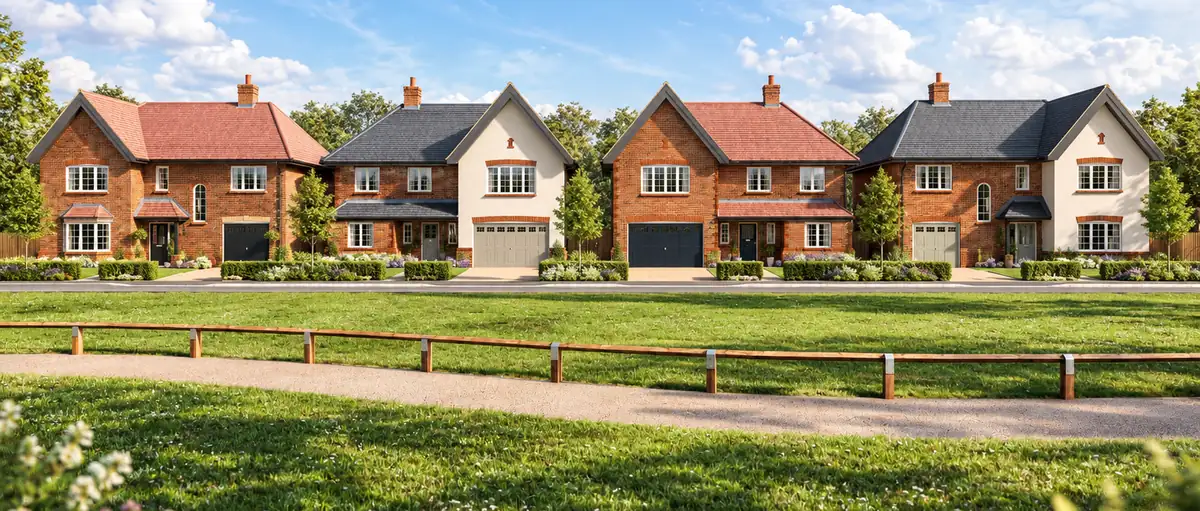
Is Your First Home pre-registration open?
Not yet. The government’s guidance, published on 28 October 2026, says: “Applications are not open yet. The scheme will open for customer pre-registration before the end of the year” (GOV.UK). Pre-registration “will not commit you to purchasing through the scheme, but will provide further information on your eligibility for the scheme and price caps applicable in your area”.
No exact date, web address or organisation has been named yet. “Before the scheme opens, the government will publish full guidance, terms and conditions on the operation of the scheme” (GOV.UK).
When does the scheme actually open?
| Milestone | When | Source |
|---|---|---|
| Scheme announced | 26 September 2026 | GOV.UK |
| Rules set at the Budget | 28 October 2026 | GOV.UK |
| Customer pre-registration and guidance | By the end of December 2026 | GOV.UK |
| First developer registrations | By the end of December 2026 | GOV.UK |
| First customer applications | February 2027 | GOV.UK |
| First property sales | April 2027 | GOV.UK; HM Treasury |
Funding is limited each year: £4.7 billion over 5 years, with £700 million in 2027 to 2028 and £1 billion in each year after, and “overall demand for the scheme will be kept under review” (GOV.UK). What that means for an early pre-registration is covered further down this page.
What does Your First Home pre-registration do?
It does, according to the guidance:
- Give you more information on whether you are eligible.
- Tell you the price cap that applies in your area.
It does not:
- Commit you to buying through the scheme.
- Reserve a home. That is between you and a participating developer, and it comes later.
- Give you a mortgage. Participating lenders “will carry out affordability and credit checks before making a lending decision” (GOV.UK).
- Guarantee a loan. The full application opens in February 2027.
The guidance mentions no fee for pre-registering. Be wary of any site that asks you to pay.
Is the funding limited, and does pre-registering early help?
Yes, it is limited: £700 million in 2027 to 2028 and £1 billion in each later year, £4.7 billion over five years. The guidance says “the government will work with developers to manage the allocation of this funding, and overall demand for the scheme will be kept under review” (GOV.UK), and the Budget says funding “will be capped annually” (HM Treasury). So the money looks set to be shared out through participating builders rather than a buyer queue. Whether pre-registering early gives you any priority is not published, and nothing says it does.
Who runs it?
Not yet published. Help to Buy was run by Homes England, the government’s housing agency, with regional Help to Buy agents handling applications. Your First Home may work the same way, but nothing says so yet.
Two things follow. First, we expect the real pre-registration to be linked from GOV.UK. Second, this site, Your First Home Calculator, is an independent guide. We do not take registrations, we cannot check your eligibility, and we never ask for your personal details.
What should you get ready to apply for Your First Home?
The full list of what you will need is not yet published. These are the things the scheme’s rules already point to:
- Proof that you are a first-time buyer, meaning you have never owned a home. The first-time buyer guide explains who counts.
- Your household income (before tax is our working assumption; the scheme has not yet said how income is counted), against the £110,000 cap, or £140,000 in London (income cap page).
- The area you want to buy in, so you can check its price cap.
- Your deposit: at least 2.5% of the price and no more than 15% (GOV.UK).
- Payslips, ID and a clean credit file for the mortgage from a participating lender. Lenders have not been named yet.
How did the Help to Buy application work?
Help to Buy’s process is a reasonable guide to what may come, until the Your First Home terms are published. Under Help to Buy 2021 to 2023, a buyer would:
- Find a new home from a registered housebuilder, then “reserve your home with the homebuilder and pay a reservation fee of no more than £500”.
- Apply through a Help to Buy agent using a Property Information Form, giving “personal and financial information, such as your income and details of the property”.
- Pass an affordability check: “your repayment mortgage should be less than 4.5 times your annual income (before tax)”.
- Receive an “Authority to Proceed”, valid for three months, and only then apply for the mortgage: “Do not apply for the mortgage until you have the Authority to Proceed”.
- Get an “Authority to Exchange”, exchange contracts and pay the deposit, then complete “within 6 months of exchanging contracts” (GOV.UK).
How can you spot a copycat Your First Home site?
Every popular government scheme attracts websites that look like government pages and charge for something that is free, or harvest personal details. Three checks:
- The address. Start from GOV.UK and follow its links. Anything else, including this site, is not the scheme.
- The price. The guidance mentions no fee to pre-register. A site asking for money to “secure your place” is not the scheme.
- The promise. Nobody can guarantee you a loan or a home before applications open. A site that does is selling something else.
What should you do while you wait for Your First Home to open?
- Check you are a first-time buyer under the eligibility rules.
- Add up your household income against the income cap.
- Work out your 2.5% deposit with the deposit calculator and keep saving: 2.5% of £230,000 is £5,750, and you will also need money for legal fees and moving.
- Check your credit file with the three main agencies and correct any errors before a lender sees them.
- Look at which developers are building near you. Only homes from developers taking part in the scheme qualify. The first developer registrations are due by the end of December 2026; whether a public list of participating developers will follow is not yet stated.
- Come back here: we will add the pre-registration link the day it is published.