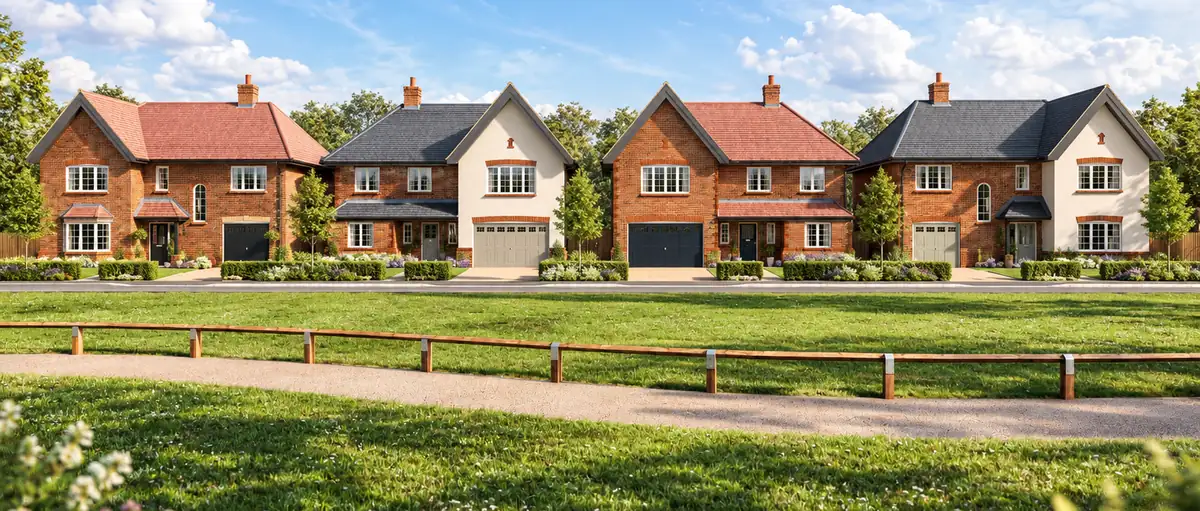
What is new build shared ownership?
New build shared ownership is buying a share, from 10% to 75%, of a newly built home from a housing association, council or housebuilder, paying a mortgage on your share and rent on the rest, under a lease that for homes funded since April 2021 follows the government’s new model (GOV.UK). The new model matters because it changed five things that make an older lease harder to live with: the minimum share, the staircasing steps, who pays for repairs, the length of the lease and how long the landlord can hold up your sale.
GOV.UK lists housing associations, councils, homebuilders and the national property websites as the places to find new shared ownership homes (GOV.UK). This page explains what the new model gives you, what a new build costs, where the risks sit and how it compares with Your First Home, the government’s other new-build route. For the basics, start with what is shared ownership.
What is the new model shared ownership lease?
The new model shared ownership lease is the set of terms the Ministry of Housing, Communities and Local Government set out on 1 April 2021 for homes delivered through the Affordable Homes Programme 2021 to 2026 (MHCLG consultation outcome). Homes England’s guidance for lenders, landlords and conveyancers summarises the changes (Homes England guidance).
| Term | Older leases | New model lease, from 2021 |
|---|---|---|
| Minimum first share | 25% | 10% |
| Smallest later purchase | Usually 10% | 5%, plus 1% a year for the first 15 years |
| Repairs | All yours from day one | Landlord covers essential external and structural repairs, and up to £500 a year for key fixtures, for 10 years |
| Lease length | Shorter, often needing an expensive extension later | At least 990 years from new |
| Landlord’s nomination period when you sell | 8 weeks | 4 weeks |
The government said the changes were meant to help people overcome the income and deposit barriers to home ownership, and to protect shared owners from unexpected repair costs and from extending their lease too soon (MHCLG consultation outcome).
One warning. Not every new-build shared ownership home is on the new model. Homes funded under the earlier 2016 to 2023 programme, and some delivered through planning agreements without grant, can still carry older terms; the MPs who examined the scheme in March 2024 asked the government to extend the 2021 improvements to the 2016 to 2023 homes because they do not have them (House of Commons committee report). The key information document and the draft lease tell you which terms you are getting. Ask before you pay the reservation fee.

What is the 10-year initial repair period?
The initial repair period is the first 10 years of a new model lease, during which the landlord, not you, pays for essential repairs to the outside of the building and essential structural repairs, and covers up to £500 a year of repairs to the fixtures that supply water, gas, electricity and heating (GOV.UK). It applies while you own less than 100%.
The £500 allowance carries over if you do not use it, up to a maximum of one year’s allowance. To claim, you use a Trustmark-approved tradesperson or one approved by the landlord, and if the landlord rejects a claim it must tell you why in writing within 7 days (GOV.UK). Outside the period, and outside those categories, the normal rule applies: you pay for repairs and maintenance no matter what share you own.
On a brand new home the builder’s warranty usually covers the cost of structural repairs for the first 10 or 12 years as well (GOV.UK). Neither covers wear and tear inside the home, decoration, appliances you buy, or anything you break.
How does the 990-year lease help?
A lease of at least 990 years from new (Homes England guidance) means the length of the lease will never be a problem for you, your buyer or a lender. Older leasehold homes lose value and become hard to mortgage as the remaining term shortens, and extending a lease costs legal fees and a premium to the landlord. The government named that expense as one reason for the change.
The 990 years does not change the fact that the home is leasehold. You still pay service charges, still need the landlord’s permission for structural alterations, and a flat stays leasehold even at 100%.

What does a new build shared ownership home cost?
Take a £300,000 new-build home. GOV.UK caps the rent on a new-build shared ownership home at 3% a year of the landlord’s share and says most landlords charge 2.75% (GOV.UK). The deposit is 5% to 10% of your share and you usually pay a reservation fee of up to £500 (GOV.UK). The 5.55% mortgage rate is our September 2026 working figure for a 95% mortgage on the share (which is what a 5% deposit leaves you with), from the HomeOwners Alliance rate table.
| 10% share | 40% share | 75% share | |
|---|---|---|---|
| Price of the share | £30,000 | £120,000 | £225,000 |
| 5% deposit | £1,500 | £6,000 | £11,250 |
| Mortgage at 5.55% over 25 years | about £176 a month | about £703 a month | about £1,319 a month |
| Rent at 2.75% on the landlord’s share | about £619 a month | about £413 a month | about £172 a month |
| Service charge | £150 a month | £150 a month | £150 a month |
| Total | about £945 a month | about £1,266 a month | about £1,641 a month |
The 10% share is the headline the new model makes possible, and the table shows its catch: two thirds of the monthly cost is rent, which builds nothing and rises every year. GOV.UK says rent is reviewed usually once a year, may go up and will not go down, and that leases from 12 October 2023 use either the Retail Prices Index plus up to 0.5% or the Consumer Prices Index plus 1% (GOV.UK). Try other shares and service charges in the shared ownership calculator.
What are the risks with new build shared ownership?
- Service and estate charges. New developments often have a service charge for the building and an estate charge for shared roads and green spaces, plus a management fee and a repairs reserve fund (GOV.UK). Ask for the estimates in writing; there is no history to check on a new scheme.
- Older terms in a new home. If the home is not on the new model, you may get a 25% minimum, no 1% staircasing, no repair period and an 8-week nomination period. Check the lease, not the brochure.
- Resale. When you sell, the landlord has first go at finding a buyer at a surveyor’s valuation (GOV.UK), and a new-build valuation can fall behind the price you paid in the early years. The selling page explains the process.
- Timing. New-build purchases often exchange before the home is finished. Make sure your mortgage offer will still be valid on the likely completion date.
- Building safety. GOV.UK’s subletting rules make a special case for homes with building safety issues (GOV.UK), which tells you they exist. Ask what fire safety certification the building has.
How does new build shared ownership compare with Your First Home?
Both are routes into a new-build home, and a first-time buyer may qualify for either. Your First Home, announced on 26 September 2026 with its rules published on 28 October 2026, gives you 100% of a new-build home in England with a 2.5% deposit and a 20% government equity loan. Household income must be £110,000 or less (£140,000 in London) and the home must be under the price cap for its council area (GOV.UK). Shared ownership gives you a share, charges rent on the rest and is also open to people who are not first-time buyers.
| On a £300,000 new build | Shared ownership, 40% share | Your First Home |
|---|---|---|
| Deposit | £6,000 | £7,500 |
| Mortgage | £114,000 | £232,500 |
| Monthly mortgage over 25 years | about £703 at 5.55% (95% of the share) | about £1,359 at 5% (77.5% of the price) |
| Rent | about £413 | none |
| Service charge | £150 | depends on the development |
| Monthly total | about £1,266 | about £1,359 plus any estate charge; £150 more from year 7 for loan interest |
| What you own | 40%, rising as you staircase | 100%, with 20% of the value owed to the government |
Shared ownership is £93 a month cheaper here once its £150 service charge is counted (about £243 before it), but £563 of its £1,266 buys nothing. Your First Home costs more each month, but every pound of the mortgage payment builds equity in the whole home, at the price of repaying 20% of whatever the home is worth when you sell, the same rule as Help to Buy. The Your First Home vs Shared Ownership page sets the two side by side, and the is it worth it page runs the five-year figures.
What should you check before reserving a shared ownership new build?
- Ask the landlord whether the home is on the 2021 new model lease and get the key information document and draft lease before you reserve.
- Ask for the service charge, estate charge and reserve fund estimates in writing.
- Price the share you want in the shared ownership calculator and add 3% a year to the rent for a realistic view.
- If you are a first-time buyer, compare the confirmed Your First Home rules before you reserve, bearing in mind its first sales are not until April 2027; the buying a new build guide covers reservation fees and snagging for either route.