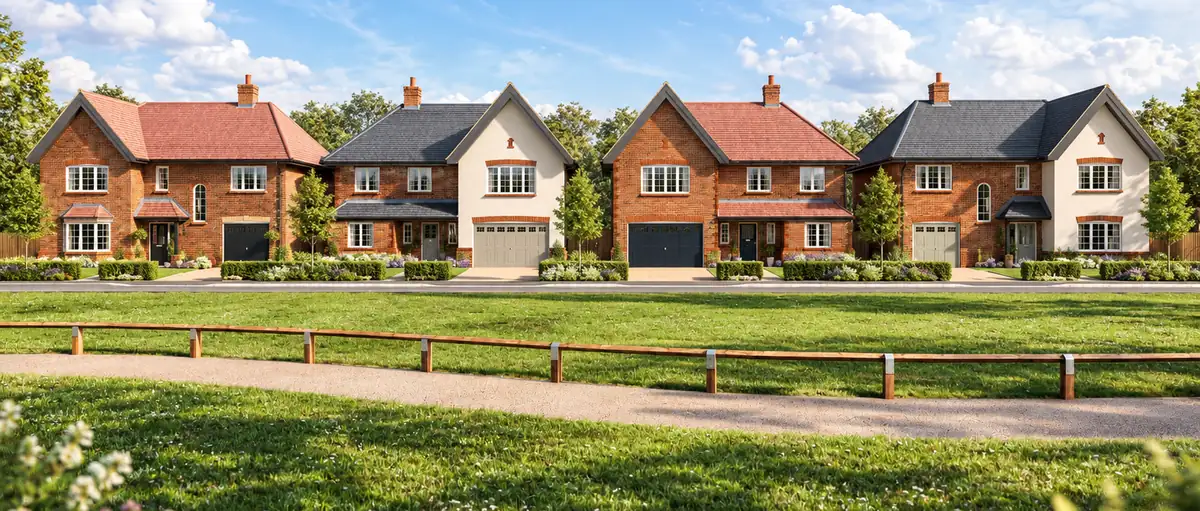
Your First Home vs Shared Ownership: how do they compare?
Your First Home vs Shared Ownership comes down to one trade: Your First Home lets you own the whole home with a 2.5% deposit but you repay the government 20% of its value, while Shared Ownership needs a similar or smaller deposit but you buy only a share and pay rent on the rest. On a £300,000 home, that is about £1,359 a month under Your First Home against about £1,116 a month plus a service charge for a 40% Shared Ownership share.
Your First Home was announced on 26 September 2026 (GOV.UK) and the government published its rules on 28 October 2026, with first sales due in April 2027 (GOV.UK). Shared Ownership is running now, with its rules on GOV.UK (GOV.UK). Your First Home’s funding is capped each year (HM Treasury), so, unlike Shared Ownership, it may run out in a given year. The table marks what is not yet published.
Looking for a shared ownership mortgage calculator? Put your own share, rent and service charge into our shared ownership calculator to see the monthly cost. Want to know which share fits your budget first? The shared ownership affordability calculator works it out from your pay, savings and bills.
| Your First Home | Shared Ownership | |
|---|---|---|
| What it is | A government equity loan on a new-build home | Buying a share of a home and renting the rest |
| Who can use it | First-time buyers in England with household income of £110,000 or less (£140,000 in London) (GOV.UK) | Households earning £80,000 or less (£90,000 in London) who cannot afford a suitable home outright |
| Deposit | At least 2.5% of the full price, at most 15% (HM Treasury) | Usually 5% to 10% of the share you buy |
| What you own | The whole home; the government holds a loan worth 20% of its value | A leasehold share, usually 25% to 75% (10% on some homes) |
| Monthly costs | A mortgage on the rest of the price (77.5% with a 2.5% deposit); no loan interest for 5 years, then 1.5% in year 6 and 3% from year 7 | A mortgage on your share, rent on the landlord’s share, and a service charge |
| Homes | New builds from developers signed up to the scheme, under a price cap for each council area, for example £375,000 in Reading (every council’s cap is on our price caps page) | New builds and resales, houses and flats, from housing associations and other landlords |
| Where | England only | England (Scotland, Wales and Northern Ireland run their own schemes) |
| Owning more later | Repay some or all of the loan before you sell, at today’s value from an independent valuation; the minimum amount is not yet published | Staircasing: extra shares of 10% or more, or 1% a year for 15 years on homes bought since 1 April 2021 |
| Selling | Repay 20% of the home’s value at the time, from an independent valuation | The landlord has 4, 8 or 12 weeks to find a buyer first; the price follows a RICS valuation |
| Main catch | You give up 20% of any rise in value, and pay loan interest from year 6 | Rent only ever goes up at reviews, and you own part of a leasehold home |
| Status on 28 October 2026 | Rules published; pre-registration by the end of December 2026, first sales April 2027 | Open now |
What does each cost on a £300,000 home?
On a £300,000 new-build home, Your First Home needs £7,500 up front and about £1,359 a month, while a 40% Shared Ownership share needs about £6,000 up front and about £1,116 a month plus a service charge. Here is where every pound goes.
| Your First Home | Shared Ownership, 40% share | |
|---|---|---|
| Price | £300,000 | £300,000 home; your share is worth £120,000 |
| Deposit | £7,500 (2.5% of the price) | £6,000 (5% of the share) |
| Government or landlord | £60,000 equity loan (20%) | The landlord keeps 60%, worth £180,000 |
| Mortgage | £232,500 | £114,000 |
| Monthly mortgage over 25 years | About £1,359 at 5% (a 77.5% mortgage) | About £703 at 5.55% (a 95% mortgage on the share) |
| Rent | None | About £413 a month (2.75% a year of £180,000) |
| Service charge | Sometimes, on flats and managed estates | Usually, paid monthly |
| Total each month | About £1,359 in years 1 to 5; about £1,509 from year 7, with £150 of loan interest | About £1,116 plus the service charge |
| What you own | The whole home, with 20% of its value owed to the government | 40% of the home |
The rates are the best fixed deals on 26 September 2026 from lenders operating across England (HomeOwners Alliance): 5% for a mortgage covering about three quarters of the price, and 5.55% for a 95% mortgage, which is what a 5% deposit on the share leaves you with. Shared Ownership mortgages come from fewer lenders and your rate may differ, so put your own quote into the Shared Ownership calculator. The rent uses the 2.75% that GOV.UK says most landlords charge, against a limit of 3% (GOV.UK).
Look at what the money buys. In month one, about £390 of the Your First Home payment pays down the mortgage (the rest is interest). In the Shared Ownership column, about £176 pays down the mortgage, about £527 is interest and £413 is rent, which buys you nothing. Shared Ownership is about £243 a month cheaper, but Your First Home builds ownership about twice as fast. Try your own figures in the Shared Ownership calculator.
What do you own with each?
Under Your First Home you own the whole home and owe the government 20% of its value; under Shared Ownership you own a leasehold share and the landlord owns the rest.
An equity loan is repaid as a percentage of value, not as the sum borrowed. If the £300,000 home is worth £330,000 when you sell, you repay £66,000; if it falls to £270,000, you repay £54,000. This is how Help to Buy worked (GOV.UK), and the government’s guidance confirms Your First Home works the same way, using an independent valuation (GOV.UK). The repayment page runs more scenarios.
Under Shared Ownership your 40% share rises and falls with the market, and so does the price of buying more. Staircasing means buying extra shares, usually of 10% or more, at market value. Homes bought on or after 1 April 2021 also let you buy 1% a year for the first 15 years at a price tracked to the House Price Index (GOV.UK). Most homes let you staircase to 100%. Every shared ownership home is leasehold (GOV.UK).
Who can use each?
Your First Home is for first-time buyers only; Shared Ownership is for anyone under the income limit who cannot afford a suitable home outright, first-time buyer or not.
Your First Home requires a first-time buyer, a new build in England from a signed-up developer, and a household income of £110,000 or less (£140,000 or less in London). The home must also be under the price cap for its council area: for example £320,000 in North Devon and £500,000 in outer London, from the full list published on 3 November 2026 (GOV.UK). The eligibility page tracks each rule as it is announced.
Shared Ownership requires a household income of £80,000 or less (£90,000 or less in London) and that you cannot afford all of the deposit and mortgage payments for a home that meets your needs. You must also be a first-time buyer, a former owner who cannot afford to buy now, forming a new household, an existing shared owner moving, or an owner who cannot afford a suitable new home. Some homes ask for a local connection (GOV.UK). Our eligibility page has the detail.
How do the costs change over time?
Your First Home gets dearer after the interest-free period; Shared Ownership gets dearer at every rent review.
For Your First Home, the interest is now confirmed: nothing for the first five years, then 1.5% in year 6 and 3% from year 7. On the £60,000 loan in our example, which is also the government’s own, that is £75 a month in year 6 and £150 a month from year 7, on top of the mortgage. It is paid separately and does not reduce what you owe on the loan (GOV.UK). The loan is normally repaid when you sell; the guidance gives no end date, and the detailed repayment rules are not yet published. The interest page has more.
For Shared Ownership, GOV.UK says rent “may go up when it is reviewed. It will not go down.” Leases signed since October 2023 rise by either the Retail Prices Index plus up to 0.5% or the Consumer Prices Index plus 1% each year; older leases use RPI plus 0.5% (GOV.UK). The service charge moves with the building’s costs (GOV.UK), staircasing costs a valuation each time, and selling means giving the landlord 4, 8 or 12 weeks to find a buyer first (GOV.UK).
Which is better for you?
Your First Home suits a buyer who can afford a mortgage on 77.5% of the price and wants the whole home; Shared Ownership suits a buyer who cannot, and would rather own part of a home than none. Work through these in order.
- Can you get a mortgage of 77.5% of the price? Our calculator’s rule of thumb is 4.5 times household income (lenders assess each case individually; see the methodology page), so a £232,500 mortgage needs roughly £52,000 of income. If not, Shared Ownership’s smaller mortgage may be the only one you can get.
- Do you expect prices to rise? Under Your First Home the government takes 20% of the rise. Under Shared Ownership you keep the gain on your share but pay more for each extra share.
- Staying put for more than five years? Your First Home’s interest and Shared Ownership’s rent reviews both bite hardest on people who neither move nor staircase.
- Is your income under £80,000 (£90,000 in London)? If not, Shared Ownership is closed to you. Your First Home’s cap is higher, at £110,000 (£140,000 in London).
- Do you mind a leasehold share? Every Shared Ownership home is leasehold. Under Your First Home the tenure is whatever the developer sells, so check each listing.
Is Shared Ownership worth it and Your First Home pros and cons go deeper.
What should you do next to choose between the two schemes?
- Run both routes on your target price in the Your First Home scheme calculator and the Shared Ownership calculator.
- Check the mortgage you could get on 77.5% of the price with the mortgage required calculator. If it is out of reach, Shared Ownership moves to the top of the list.
- If Shared Ownership looks right, read the Shared Ownership guide and the staircasing page first.
- Read our Budget 2026 summary for the Your First Home rules confirmed on 28 October 2026, then check your council’s cap on the price caps page.