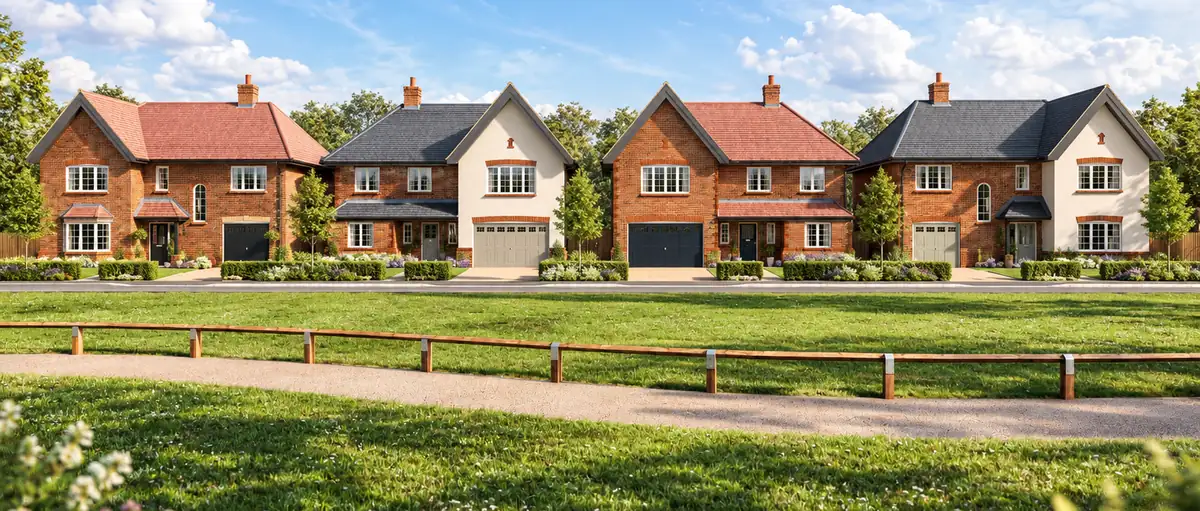
What is a new build deposit contribution?
A new build deposit contribution is money the housebuilder pays towards your deposit, almost always up to 5% of the price, usually handed to your solicitor when you complete. On a £230,000 home that is £11,500. Barratt, Redrow, Persimmon, Taylor Wimpey, Crest Nicholson, Countryside, Bellway and Bloor all offered one on 2 October 2026 under names such as Deposit Boost, Deposit Match and Deposit Top-Up, and every version has the same shape: you still find your own deposit, usually 5% or 10%, the offer is on selected plots, and your lender has to accept it.
A contribution is one kind of incentive. An incentive is anything the builder gives you to make you buy, from paying your stamp duty to fitting free flooring. Builders prefer a contribution to cutting the price because the headline price stays the same, which matters for the other plots they still have to sell. It matters for you too, in ways this page spells out.
One confusion to clear up first. Some mortgage brokers sell a product also called Deposit Boost, where a relative remortgages their own home to gift you a deposit (Tembo). That is a family mortgage, not a builder offer, and it is not what this page is about.
How does a deposit contribution work, step by step?
The contribution is agreed when you reserve, declared to your lender on a standard form, checked against the lender’s limit, and paid at completion. In order:
- You agree it at reservation. The amount is fixed before you pay the reservation fee: Countryside says it “must be recorded on the Reservation Form” (Countryside), and Persimmon agrees the sum “prior to the reservation” (Persimmon). If it is not in writing, it does not exist.
- You pay your own deposit at exchange. Exchange of contracts is the moment the purchase becomes legally binding, and the deposit in the contract comes from you, not the builder. The buying a new build guide covers the 28 days you usually get to reach exchange.
- The builder fills in the UK Finance Disclosure Form. The form covers “incentives, tenure type and method of construction” on every new build sale and has been “compulsory since August 2018” (UK Finance). “It is the responsibility of the seller to complete the form”, it must capture “all incentives offered, both financial and non-financial”, and it goes to the lender’s conveyancer, the solicitor doing the lender’s legal work, “and to the valuer when requested” (UK Finance FAQ). If the incentives change later, the builder’s solicitor should send “an amended version of the form”.
- Your lender checks the total, and the money arrives at completion. Most lenders accept incentives up to 5% of the price; the next section shows what each does above that. Nationwide’s valuer “will return a nil valuation to us if the UK Finance Disclosure Form isn’t available” (Nationwide), so no form, no mortgage. Most builders then pay the contribution “to the purchaser’s solicitor at the time of completion” (Barratt), who sets it against the balance you owe; the builders table below shows the exceptions.

How do lenders treat a deposit contribution?
Lenders treat it as a builder incentive, accept it up to about 5% of the price, and either refuse or adjust the price above that. Loan-to-value, or LTV, is the mortgage as a percentage of the price, and it largely decides the rate you pay. What each lender’s own published criteria said on 2 October 2026:
| Lender | What its published criteria say |
|---|---|
| Nationwide | “Builder cashback, deposits, vouchers, part exchange agreements, and any other financial incentives” allowed “up to a maximum total of 5% of the purchase price or valuation”. Above 5%: “We will decline the case”. Above 90% LTV, incentives “are not accepted” (Nationwide) |
| NatWest | Accepts incentives “up to 15% of the property’s purchase price”, but “If the incentives exceed 5% of the purchase price, they’ll be deducted from the price” and lending is based on “the reduced price or the property valuation, whichever is lower” (NatWest). “Customers must provide at least 5% from their own funds” (NatWest Intermediary Solutions) |
| Accord | Houses: “the maximum allowable builder’s incentive is 5%”; above that “the difference should be deducted from the purchase price and LTV calculated on the lower figure”. Flats: cashback or deposit paid “is not acceptable unless the full incentive is deducted from the purchase price” (Accord) |
| Halifax | “Mortgage plus incentive cannot exceed 95% LTV” on a house and “cannot exceed 90% LTV” on a flat; “Deposit” and “Cash or cashback” are on its list of financial incentives (Halifax) |
| Santander | “Cash or cashback up to 5% of the purchase price” accepted at 90% LTV or below; cash and deposit are not on its list of acceptable incentives above 90% LTV. No deposit “raised from an unsecured personal loan which is subsidised by a builder or developer” (Santander) |
| Skipton | Incentives “of 2% or less have no LTV restrictions applied”; between 2% and 5% “the maximum LTV will be reduced by 5%”; on its Track Record mortgage “financial incentives of more than 2% are not acceptable” (Skipton) |
| Barclays | “We will accept up to 5% builder financial incentive” and “A minimum 5% personal deposit is required. This can include gifts from family” (document dated July 2022: Barclays) |
Read those rules together and one thing stands out: with the big lenders, the builder’s money does not replace your own 5%. Nationwide and Santander take no cash incentives above 90% LTV, Halifax’s cap leaves no room for one on a 95% mortgage, and NatWest and Barclays ask for 5% of your own money in writing. A deposit contribution turns a 5% deposit into a 10% one and drops you into a cheaper rate band. It does not get you a home with nothing saved.
Does a 5% or 6% deposit contribution work on a £230,000 home?
With a 5% contribution and 5% of your own, you borrow £207,000, which is 90% of the price and inside every lender’s limit. Push the contribution to 6% and the lenders split: Nationwide declines, NatWest and Accord lend against a lower price. The home is Rightmove’s average starter home price of £230,000, the one used across this site.
| 5% contribution | 6% contribution | |
|---|---|---|
| Price on the contract | £230,000 | £230,000 |
| Builder pays | £11,500 | £13,800 |
| You pay | £11,500 | £11,500 |
| Mortgage needed | £207,000 | £204,700 |
| Loan-to-value on the headline price | 90.0% | 89.0% |
| Nationwide | Accepted (total incentives 5%, at 90% LTV) | Declined: “We will decline the case if the total value is more than 5%” |
| NatWest, Accord (house) | Accepted, no adjustment | The £2,300 above 5% comes off the price. Lender’s price £227,700; LTV £204,700 ÷ £227,700 = 89.9% |
| Halifax | 90% mortgage plus 5% incentive = 95%: fine on a house, over the 90% limit on a flat | 89% plus 6% = 95%: right on the house limit, over the flat limit |
Three things to notice. First, the 6% deal still works with NatWest or Accord on a house: your £11,500 is 5.05% of the adjusted price and the loan is still under 90%. The extra £2,300 lowers your mortgage, but the lender gives you no credit for it in the LTV. Second, it costs real money when the extra was meant to lift you into a cheaper band: put down 9% yourself (£20,700) with a 6% contribution (£13,800) and the £195,500 mortgage is exactly 85% of the headline price but 85.9% of NatWest’s adjusted £227,700, so you are priced in the 90% band after all. Third, on a flat the rules bite harder: Halifax caps mortgage plus incentive at 90%, and Accord takes a cash contribution off the price in full.
If a lender objects, the simplest fix is to ask the builder to cut the contribution to 5% and give the rest as a price reduction, which raises the question of whether a price cut was the better deal all along.

What are the catches?
The catches are in the terms, and they are remarkably consistent across builders:
- You still need your own deposit. A minimum 5% from you with Barratt, David Wilson Homes, Redrow, Persimmon’s Deposit Match and Countryside (Barratt); 10% with Persimmon’s Deposit Boost, Taylor Wimpey and Crest Nicholson (Taylor Wimpey). The table below links each one.
- Selected plots only. Every offer checked limits itself to selected plots or developments (Taylor Wimpey’s wording is to “check that the home you want to buy from us is covered”), and Countryside says the amount “may vary depending on plot or development” (Countryside).
- A deadline. Barratt, David Wilson Homes, Redrow, Persimmon and Crest Nicholson all say legal completion “must take place on or before the date agreed at the time of reservation” or similar (Redrow); Countryside makes the offer “conditional upon the purchase proceeding to legal completion”; Bellway sets a reservation deadline instead: its page still said reservations by 31 October 2026 when we checked on 26 October, so ask whether a newer offer has replaced it (Bellway). On a home not yet built, a completion date is a promise about construction, so ask what happens if the builder is late, not just if you are.
- A cap. Usually £25,000, which is 5% of £500,000; Redrow goes to £40,000 in London (Redrow).
- No stacking. It “cannot be used in conjunction with any other” offer at Barratt, Redrow, Persimmon, Crest Nicholson, Countryside and Bellway. If flooring or stamp duty paid is also on the table, one of them goes.
- Subject to lender’s criteria. Most builders say so in their terms, and Bloor puts it plainly: “Your lender will consider our contribution when they assess your mortgage application” (Bloor).
- A nudge towards the builder’s adviser. No page opened on 2 October 2026 makes the offer conditional on using the builder’s mortgage adviser or solicitor, but several offer an introduction: Barratt’s sales adviser “can also introduce you to a New Homes Mortgage Adviser” (Barratt). You can still use your own.
Is a deposit contribution better than a straight discount?
For the mortgage rate, a contribution usually wins; for your real equity and sometimes for stamp duty, a discount wins. Take £230,000, with £11,500 of your own money and a £207,000 mortgage either way.
- As a 5% contribution: the price stays £230,000, so the £207,000 mortgage is 90% LTV.
- As a £11,500 price cut: the price is £218,500, so the same £207,000 mortgage is 94.7% LTV, and you are a 95% borrower.
On the HomeOwners Alliance table for 26 September 2026, the one this site’s calculators use as their default, the best two-year fix from a lender operating across England was 5.13% at 90% LTV and 5.57% at 95% (HomeOwners Alliance). On £207,000 over 25 years that is about £1,226 a month against about £1,280, around £54 a month for as long as the rate difference lasts. Rates have moved since, but the gap between bands is the point: the contribution buys a cheaper band for the same debt.
Now the other side. The contract says the home is worth £230,000, but the builder was willing to take £218,500 of real money for it. Your true cushion against a price fall is the £11,500 you paid, 5% of the headline price, not the 10% your lender’s paperwork implies. A straight discount gives you the same cushion with a mortgage that is honestly labelled.
Stamp duty can tip it too. The law taxes “any consideration in money or money’s worth given for the subject-matter of the transaction, directly or indirectly, by the purchaser” (Finance Act 2003, Schedule 4; GOV.UK). HMRC’s manual has no paragraph that names builder deposit contributions as far as we can find, so whether yours reduces the taxable figure depends on how the contract is drafted, and your solicitor decides what goes on the return; Countryside’s own terms warn that “the contribution may not reduce the amount of stamp duty land tax payable” (Countryside). For a first-time buyer on a home up to £300,000 the bill is £0 either way (GOV.UK). Above that it can matter: on a £320,000 home, if the return is made at the headline price, you pay 5% on the £20,000 above £300,000, which is £1,000, while a £16,000 price cut to £304,000 means 5% on £4,000, which is £200. The stamp duty guide has the bands. So ask before you sign: would you give me the same value as a price reduction instead? If the answer is no, you have learnt why the offer is shaped the way it is.

What happens if the valuation comes in below the price?
The lender lends against the lower of the price and the valuation, and the contribution does not fill the gap: NatWest bases lending on “the reduced price or the property valuation, whichever is lower” (NatWest). A down valuation, when the lender’s surveyor “values the property at less than the price the buyer has agreed to pay”, “can be more common” on new builds (HomeOwners Alliance), and a contribution can make it more likely still: the Land Registry treats a “gifted deposit” or “cashback” as a discount and records the sale at “the net (lower) sum” (HM Land Registry), so on an estate where every plot sold with a 5% contribution the public record should show prices 5% below the headline, which is where the next valuer starts. If your £230,000 home is valued at £218,500, a 90% lender offers £196,650, not £207,000, and the £10,350 gap is yours to find. The new build mortgages guide runs through the options.
Which builders offer a deposit contribution?
Most of the large housebuilders offer one, under slightly different names and with different minimum deposits. The table repeats what each builder’s own page said on 2 October 2026. It is a description, not a ranking: offers change by the week and by the plot, and the terms you are shown at the sales office are the ones that count.
| Builder and name | In the builder’s words | Your minimum | Cap | When paid |
|---|---|---|---|---|
| Barratt Homes, Deposit Boost | “up to an additional 5% of the sale price” (Barratt) | 5% | £25,000 | Solicitor, at completion |
| David Wilson Homes, Deposit Boost | “up to an additional 5% of the sale price” (David Wilson Homes) | 5% (the page’s example) | £25,000 | At completion |
| Redrow, Deposit Boost | “up to a maximum of 5% deposit” (Redrow) | 5% | £25,000; £40,000 in London | Solicitor, at completion |
| Persimmon, Deposit Boost | “an extra 5% towards your deposit” (Persimmon) | 10% | 5% of price | Solicitor, at completion |
| Persimmon, Deposit Match | “match it by providing an additional 5%” (Persimmon) | 5% | 5% of price | Solicitor, at completion |
| Taylor Wimpey, Deposit Top-Up | “up to 5% of the purchase price”, to “a maximum total deposit of 15%” (Taylor Wimpey) | 10% | £25,000 | Your advisers, on completion |
| Crest Nicholson, Deposit Boost | “an extra 5%”; £30,000 on £300,000 becomes £45,000 and “an 85% mortgage” (Crest Nicholson) | 10% | Not stated | Solicitor, on legal completion |
| Countryside, Deposit Contribution | “an extra 5% deposit boost” if you have up to 10% (Countryside) | 5% | Varies by plot | Credited at exchange; reserve by 30 December 2026 |
| Bellway, deposit contribution | “cannot be more than 5% of the house asking price” (Bellway) | Not stated | 5% of price | Off the completion statement; reservations by 31 October 2026 (page checked 26 October) |
| Bloor Homes, Deposit Boost | “We’ll contribute towards your deposit”; amount “depends on which home and development you choose” (Bloor) | Not stated | Not stated | Not stated; can go to legal fees or stamp duty instead |
Every row is for selected plots only and depends on your lender accepting the contribution. Most are tied to completing by the date agreed at reservation, and Barratt, Redrow and Persimmon rule out buy-to-let in their terms; where the table says “not stated”, the builder’s page was silent on 2 October 2026. If a builder is missing, its page could not be checked that day. We rechecked every page in the table on 26 October 2026: all ten still showed the offer.
Can I use a deposit contribution with Your First Home?
Nobody knows yet, because the rule is not yet published. The government’s guidance of 28 October 2026 asks for a deposit of “at least 2.5% of the purchase price” and an equity loan “worth 20% of the purchase price, interest free for 5 years”, on a new build from a developer signed up to the scheme (GOV.UK); the Budget adds that the deposit can be up to 15% (Budget 2026). It says nothing at all about builder incentives or deposit contributions alongside the scheme. What it does set out is what builders pay: each signs a participation agreement and pays a fee on the final sale price of every scheme home, 1% on its first 100 a year, 3% on the next 150 and 4% above 250 (GOV.UK). The guidance says full eligibility rules will be published before applications open in February 2027. An equity loan means the government lends you a share of the price and takes the same share of the home’s value back, normally when you sell; the how it works page explains it.
Until those rules appear, the closest precedent is the best guide: it said yes to a 5% incentive, worked the government’s loan out on the price after it, and said no to the builder paying your deposit.
What Help to Buy, the previous government equity loan scheme, allowed:
- Incentives up to 5%, declared, and taken off the price before the loan was worked out. Homes England’s builder guidance for the 2021 to 2023 scheme said incentives must “not exceed 5% of the Full Purchase Price”, must go on the UK Finance disclosure of incentives form, and that “the investment equity calculation is undertaken on the Full Purchase Price after incentives have been discounted” (GOV.UK); the now-withdrawn guidance for the 2013 to 2021 scheme said the same (GOV.UK). On a £230,000 home with an £11,500 contribution, the 20% loan was 20% of £218,500, which is £43,700, not £46,000.
- No builder-funded deposit. The same 2021 to 2023 guidance is blunt: “Developer ‘deposit-paid’ incentives are not permitted. All Help to Buy purchasers must contribute their own 5% deposit to the purchase” (GOV.UK), paid “at exchange of contracts” (GOV.UK). Homes England’s handbook for conveyancers backs it: “The Borrower’s Cash Contribution must not be financed by the Seller” (GOV.UK).
So if Your First Home copies Help to Buy, a builder could still offer up to 5% in incentives on a scheme plot, but the 2.5% would have to be your own money, the government’s 20% would be worked out on the price after the incentive, and the builder’s cash would reduce what you owe at completion rather than stand in for your deposit. That is our reading of the old rules, not an announced rule of the new scheme. The deposit page covers what 2.5% looks like in pounds and what is still unknown about gifts. If you hope to combine the two, ask the sales office the last question in the list below, and ask whether the contribution is a price reduction or a payment at completion, because the scheme’s rules may treat the two differently.
What should I ask before I reserve?
Ask these in writing and keep the answers:
- How much of my own deposit do I have to put in, 5% or 10%, and how much is the contribution in pounds for this plot?
- What is the completion deadline, and what happens to the contribution if your build is late?
- What is the total value of every incentive on this plot, including flooring, upgrades and stamp duty paid? Is it over 5% of the price?
- Would you give me the same value as a price reduction instead?
- Is this development signing up to Your First Home, and does the offer survive on scheme plots?
What should you do next if a builder offers a deposit contribution?
- Check what your lender does with incentives before you reserve, not after: the table above links each lender’s own page, and a mortgage adviser can tell you which lenders fit your deposit and home type.
- Read new build mortgages for offer validity, flat loan limits and down valuations, and buying a new build for reservation fees, exchange deadlines and why to use your own solicitor.
- Weighing a builder’s offer against a government scheme? Your First Home vs Deposit Unlock compares the builder-backed routes, and the first-time buyer costs guide lists the fees a contribution does not cover.
- Run your own price through the deposit calculator. Whether a builder’s contribution can sit alongside a 2.5% Your First Home deposit is not yet published, so get the sales office’s answer in writing and check it again when the full rules come out before applications open.